
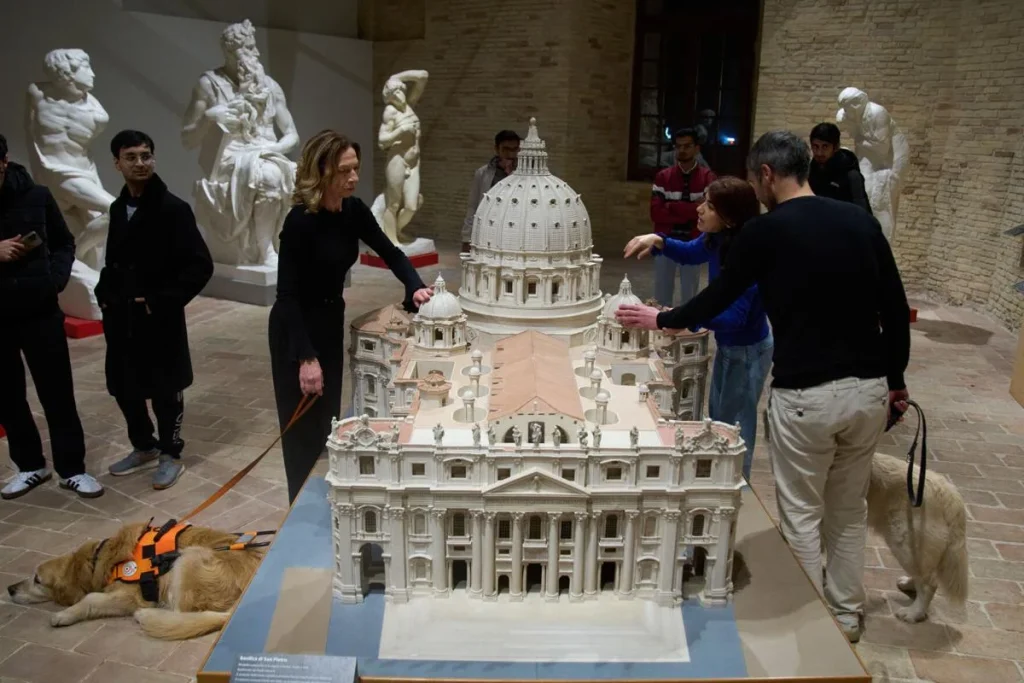
Italy is making its art and culture more accessible to people with disabilities, particularly the blind and visually impaired, through tactile models, braille signs, and audio guides at sites like the Colosseum and Pompeii.
Inclusive tourism initiatives include guided sensory experiences, such as reenacting statues’ postures and touring landmarks at night to enhance auditory and tactile engagement.
The Museo Omero in Ancona offers a unique tactile art experience with replicas that visitors are encouraged to touch, emphasizing the importance of non-visual ways to appreciate art.
Artists like blind sculptor Felice Tagliaferri contribute to inclusive art by creating tactile works that convey deep personal and emotional meaning.
This movement not only addresses accessibility and human rights but also has economic benefits, as travelers with disabilities often travel with companions and represent a significant segment of the older population.
Read the full article on Italy’s accessibility art on the Tusson.com Website.
Latest Blog Post
Mobile accessibility tells half the story
September 8, 2026
I audited five public design systems. The one built for mobile, Material 3, hands designers accessibility as first-class properties. The web still treats the same

Mark SMiller is a digital accessibility consultant who helps organizations build accessible, inclusive digital experiences. He speaks regularly at industry conferences,, CSUN, CVENt and apperes on many webinars and podace. , He trains teams on practical, sustainable accessibility workflows.
Comments