
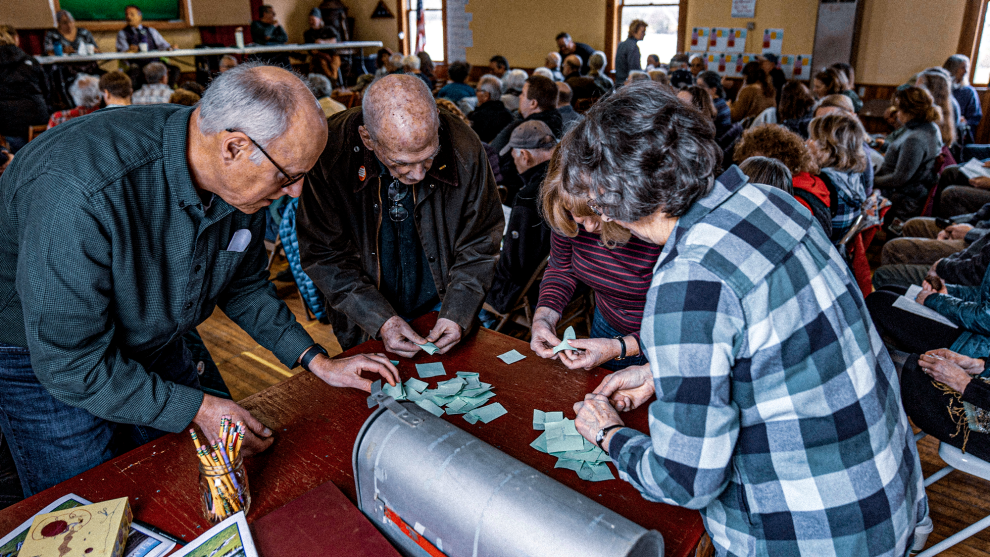
Vermont’s traditional in-person Town Meeting Day may effectively exclude many disabled voters—Kate Larose and her husband were denied permission to mark votes at home—because towns largely require physical attendance.
Physical barriers (inaccessible buildings, long meetings) and weak oversight exclude many disabled voters and mean disabled people struggle to participate and therefore cannot influence local decisions that directly affect them; Vermont and New Hampshire rank poorly for disability access.
Although the ADA and recent DOJ guidance apply to local elections, enforcement is limited and state officials often defer to towns; a statewide working group produced inadequate guidance and advocates report bureaucratic resistance.
Disability advocates urge practical changes—mail ballots, ballot drop-off, hybrid/Zoom participation—and point to examples like Iowa’s 2024 caucus reforms as models for making town meetings more inclusive.
Read more about local election accessibility on Mother Jones

Mobile accessibility tells half the story
September 8, 2026
I audited five public design systems. The one built for mobile, Material 3, hands designers accessibility as first-class properties. The web still treats the same

Mark SMiller is a digital accessibility consultant who helps organizations build accessible, inclusive digital experiences. He speaks regularly at industry conferences,, CSUN, CVENt and apperes on many webinars and podace. , He trains teams on practical, sustainable accessibility workflows.
Comments